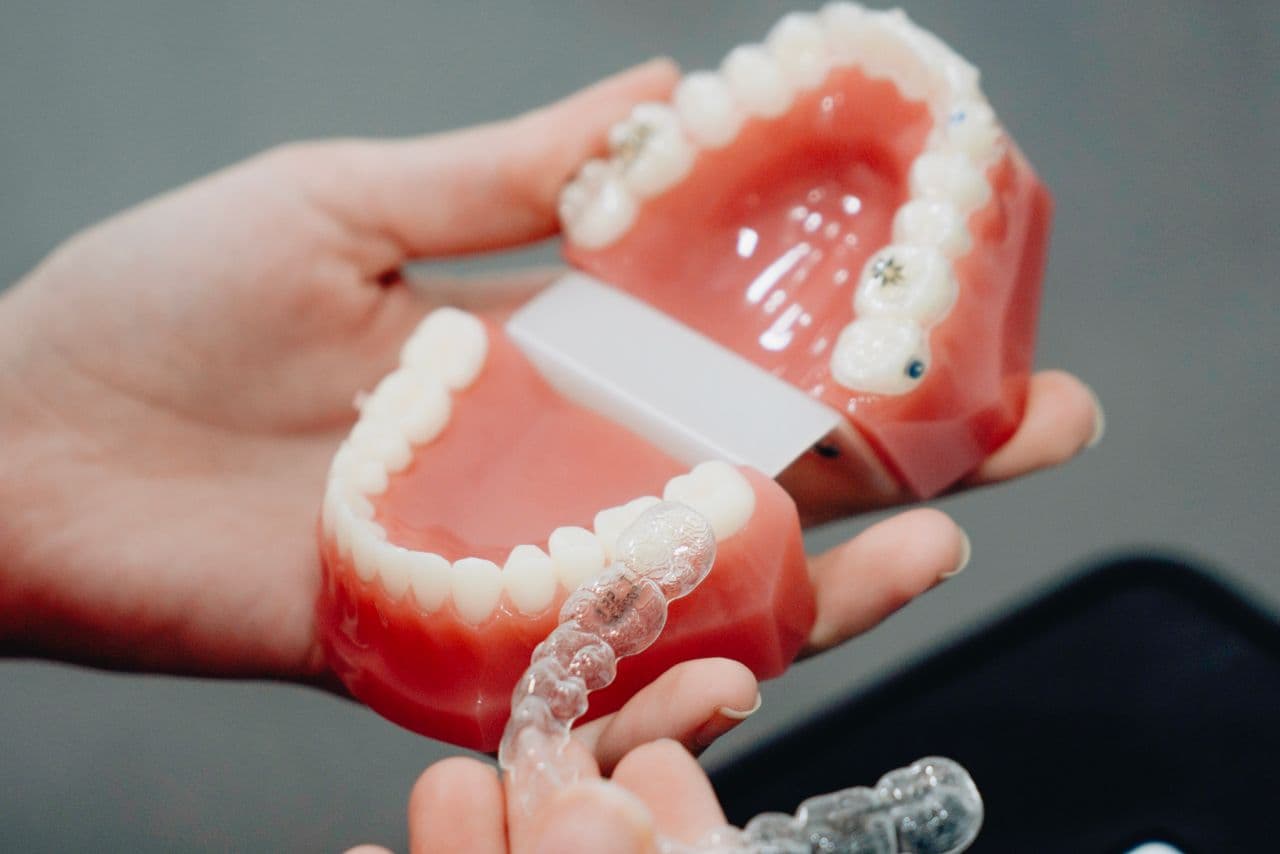
What a night guard actually does
A night guard is a custom-made appliance worn over the teeth during sleep. It does one thing well, and it is worth being precise about what that is.
It does not stop you grinding. Bruxism is not a habit you break by putting something in your mouth. It arises from sleep arousal patterns, stress, and in some cases airway obstruction, and a guard does not act on any of them. Products marketed as stopping bruxism are overselling.
What it does is intercept the damage. Your teeth grind against a replaceable piece of acrylic instead of against each other. The wear that would otherwise flatten your enamel — permanently, since enamel does not regenerate — happens to the appliance, which can be remade.
Most patients also report a secondary benefit: less morning jaw soreness and fewer waking headaches. Changing how the jaw closes overnight alters how the muscles load, and for many people that is the improvement they actually notice day to day.
How to tell whether you grind your teeth
Grinding is frequently silent, and most people are told rather than discovering it themselves. The signs worth knowing:
- Waking with a dull ache along the jaw, in front of the ears, or at the temples
- Morning headaches that ease through the day
- Sensitivity to cold without obvious decay, from worn enamel exposing dentine
- Flattened, chipped, or squared-off edges on the front teeth
- A jaw that tires while chewing
- Ridging along the inside of the cheeks or scalloped edges on the tongue, from pressure against the teeth
- A partner hearing it — though absence of noise means nothing, since clenching is silent
Wear patterns are the reliable evidence, and they show up at a routine exam long before most people notice a symptom. That is usually how the conversation starts.
Custom versus over-the-counter guards
This is the decision most people are actually weighing, so here is the honest comparison.
| | Custom guard | Boil-and-bite / stock | | --- | --- | --- | | Fit | Made from impressions or a scan of your teeth | Approximate, moulded at home | | Retention | Seats firmly, stays put overnight | Loosens; often found on the pillow | | Bulk | Thin enough to tolerate all night | Noticeably thicker | | Force distribution | Even across the arch | Uneven, concentrated at high points | | Effect on clenching | Neutral or reduces it | A loose guard can increase clenching | | Bite checked by a dentist | Yes, and adjusted | No | | Typical lifespan | Several years | Months |
The counterintuitive line in that table is the one about clenching. A loose appliance gives the jaw something to chase and chew against. Some people clench harder against a poorly fitting guard than they do against nothing, which is the opposite of the intended result.
There is also what a retail guard cannot include: an examination. Grinding damage, cracked teeth, and gum recession all need to be assessed before an appliance is worn over them nightly, and a pharmacy cannot do that.
If cost is the reason you are considering a retail guard, say so when you book. It is a more common conversation than you would think, and a written estimate beats guessing.
What a night guard will not fix
Being clear about the limits is part of recommending one honestly:
- It does not repair existing wear. Enamel already lost stays lost. A guard prevents further loss; restoring what is gone is separate treatment.
- It does not treat the cause. Stress, sleep quality, and airway issues remain exactly as they were.
- It does not cure jaw joint disorders. It may relieve symptoms considerably, but TMJ problems have their own assessment and management.
- It does not correct your bite. If teeth meet badly, the guard sits over that, it does not fix it.
The question worth asking before you get one: sleep apnea
There is a well-documented association between bruxism and sleep-disordered breathing. Grinding episodes frequently cluster around the arousals that follow breathing interruptions during sleep.
That makes grinding a signal worth following, not just a dental problem to be padded. If you grind and also snore, wake unrefreshed, or have been told you stop breathing during sleep, say so. Fitting a guard without asking the question treats the symptom and leaves something more serious undetected.
To be clear about the boundary: sleep apnea is diagnosed by a physician through a sleep study, not by a dentist. What we can do is notice the pattern, ask the question, and refer you appropriately. Our sleep apnea page explains where dentistry does and does not fit in.
Getting one made, and looking after it
Examination first
We check the wear pattern, the health of the teeth taking the force, your gums, and how your teeth meet. If a cracked tooth or untreated decay is found, that is dealt with before a guard is made over it.
Impressions or a digital scan
A single appointment. The guard is made to your teeth, which is the entire reason it works better than a retail one.
Fitting and adjustment
We seat the finished guard, check it holds, and adjust the contact points so the force spreads evenly. This is the step retail guards skip.
Bring it to your check-ups
Every time. We inspect the guard for wear and perforation and check that your bite has not changed underneath it. Wear on the guard is also a useful record of how much force you are generating.
Day-to-day care: rinse it after use and brush it gently with a soft brush and cool water. Hot water warps acrylic and ruins the fit — never put it in the dishwasher or in boiling water. Store it dry in its ventilated case, not in a pocket or a napkin, and keep it away from pets, who find them irresistible.
When to have it looked at
Bring it in if the guard is cracked or perforated, if it no longer seats properly, if it has worn thin where the teeth meet, or if wearing it has started to feel different. And come in regardless if you notice new sensitivity, a tooth that has chipped, or jaw pain that is getting worse rather than better — those are signs the grinding is progressing and the plan may need revisiting.
Our night guards service page covers what fitting one at this clinic involves, and toothaches and sensitivity is worth reading if worn enamel has left your teeth reacting to cold.