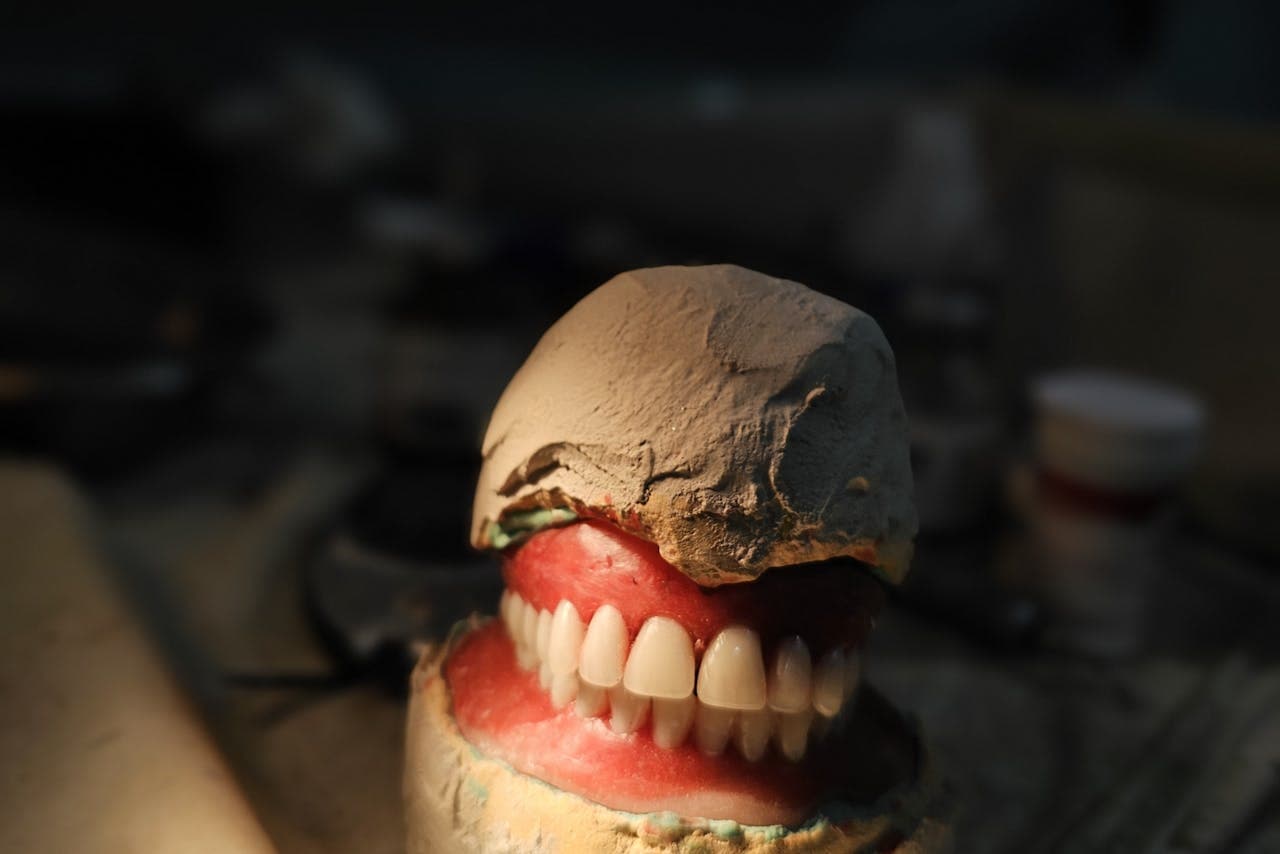
Full, partial, or implant-supported: what's the difference?
Dentures come in several forms, and the right one depends on your situation:
- Full dentures replace all the teeth in an upper or lower arch. They rest on your gum tissue and are held in place by suction and the shape of your ridge. Some patients also use a small amount of adhesive for extra confidence.
- Partial dentures fill in gaps when several teeth are missing but others remain. They typically clasp onto natural teeth for support and are removable. A partial is a good option when a fixed bridge isn't practical or affordable.
- Implant-supported dentures attach to two or more implants placed in the jawbone. They snap securely in place, don't require adhesive, and do a much better job of preserving bone over time. They cost more and involve a minor surgical step, but many patients find the stability worth it.
How we fit a denture
Getting a well-fitting denture takes several visits, and rushing any of them tends to cause problems later. Here's how the process usually unfolds:
Assessment and impressions
We start with an exam to assess the condition of your remaining teeth (if any), your gum tissue, and the ridge of bone underneath. We take detailed impressions and measurements, these form the foundation of the denture.
Bite registration and tooth selection
We record how your jaws close together and work with you to choose teeth that match your preferences for shape, size, and shade. This is a collaborative step, we want the result to feel like yours.
Try-in appointment
A wax try-in lets you see and feel a close representation of the finished denture before it's finalized. We check fit, bite, and appearance together and make any adjustments at this stage, not after.
Delivery and initial adjustments
When your finished denture arrives, we fit it carefully and walk you through insertion, removal, and cleaning. Expect a few follow-up visits in the first weeks, minor pressure spots are common and quick to fix.
What to expect in the first few weeks
The adjustment period is real, and it helps to know what's normal:
- Speaking may feel slightly different at first, particularly with "s" and "f" sounds. Reading aloud at home for a few minutes a day helps your mouth adapt faster than you'd expect.
- Chewing takes practice. Start with soft foods cut into small pieces, and work up gradually. Avoid very hard or sticky foods while you're getting used to the fit.
- Soreness in small areas is common. If a spot is rubbing consistently, come in, we can adjust it in minutes. Trying to push through sustained pain rarely helps.
Caring for your denture
Dentures need daily cleaning just like natural teeth. A soft-bristled denture brush and mild soap (or a denture cleaner) are usually all you need. Avoid regular toothpaste, it's abrasive enough to scratch the surface over time. Rinse after meals when you can, and soak the denture overnight to keep it from drying out and warping.
Handle your denture over a folded towel or a basin of water, a dropped denture can chip or crack more easily than it looks like it should.
When to come back
Plan on returning if:
- The fit feels noticeably looser than when it was new
- You've lost or gained weight, or your health has changed
- A sore spot isn't resolving on its own
- It's been more than a year, routine check-ups catch small issues before they become bigger ones
Thinking about implants to support a denture?
If stability is your main concern, it's worth learning more about dental implants and how a small number of implants can transform a loose denture into something that feels much more secure. We can also discuss whether crowns or a bridge might be a better fit if you have some strong teeth remaining.
Ready to explore your options?
Book a consultation and we'll assess what you're working with, walk through the realistic choices, and give you a written estimate — a straightforward conversation about what will work best for your mouth and your life.