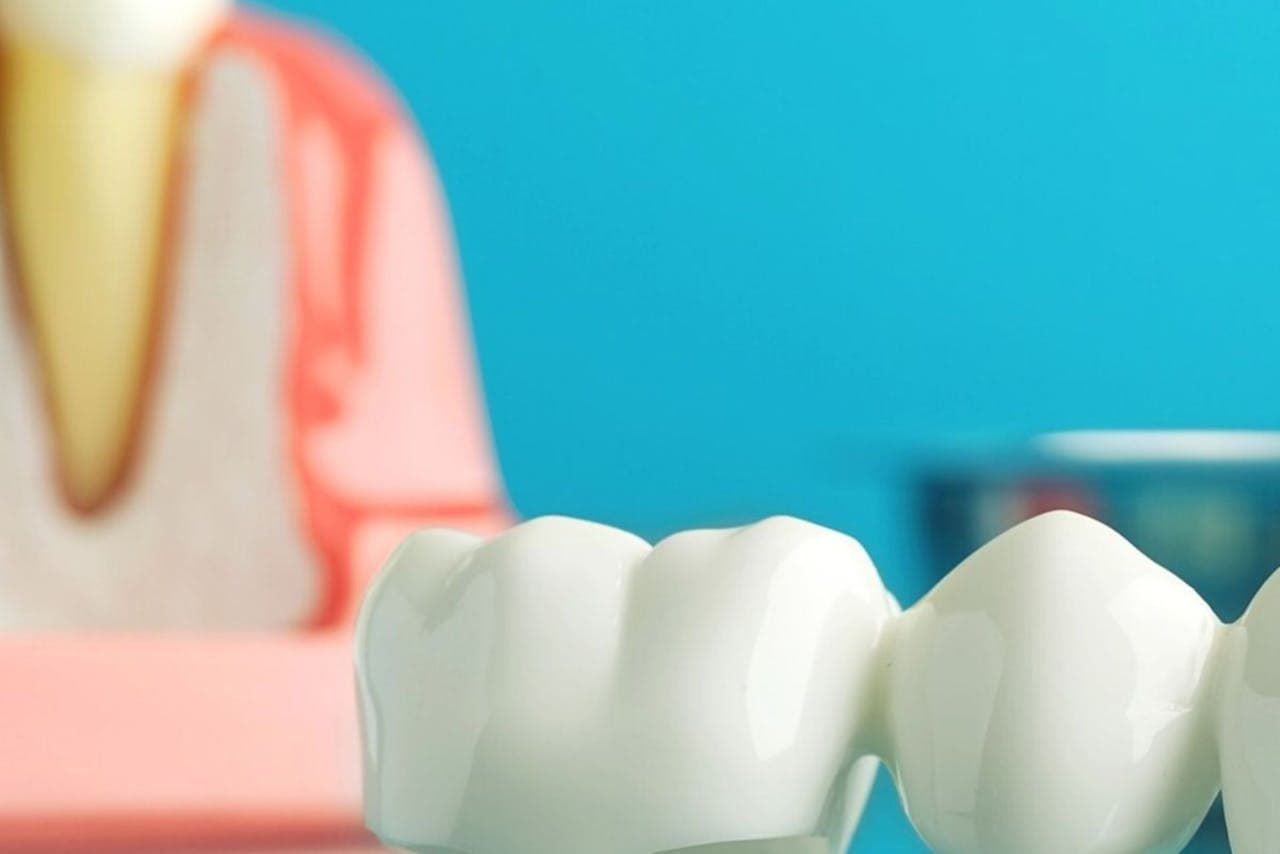
When does a crown need replacing?
Crowns are not replaced on a schedule. A crown that fits well, seals the tooth, and feels comfortable is left alone regardless of how old it is. Replacement is prompted by a specific failure, and there are only a handful of common ones.
Decay at the margin. The margin is the line where the crown meets the tooth. If that seal breaks down, bacteria reach the tooth structure underneath. This is the single most common reason a crown is replaced, and it is usually found on an X-ray or during a check-up before you notice anything.
Damage to the crown itself. Porcelain can chip, and the biting surface can wear through over many years, particularly on back teeth or if you grind.
A fit that has opened up. Food packing consistently around one crown, or floss that shreds or catches in the same spot, often means the margin is no longer tight.
Gum recession. As gums recede, the crown edge and sometimes a dark line of underlying material become visible. On a front tooth this is often the reason a patient asks about replacement.
Recurrent looseness. A crown that has been recemented and comes off again is usually telling you the fit, the remaining tooth structure, or the bite needs addressing rather than more cement.
If your crown has just come off and you are looking for what to do right now, our guide on what to do if a crown falls off covers the immediate steps.
How a crown is removed
Most people are surprised that removal is usually destructive to the old crown. A cemented crown is designed to stay on, so taking it off intact is often not possible.
The usual method is sectioning. Under local anaesthetic, the dentist cuts a narrow groove through the crown with a fine bur, then gently spreads the groove until the crown releases and lifts away in pieces. It is a controlled procedure and you feel pressure and vibration rather than pain.
Where a crown is already loose, or where there is a specific reason to keep it, a crown remover can be used instead: an instrument that grips the edge and delivers a small, sharp tapping force to break the cement seal without cutting.
Once the crown is off, the tooth underneath is cleaned and assessed. This is the point at which any hidden decay becomes visible, and occasionally where the plan changes — a tooth that looked straightforward on an X-ray sometimes needs more rebuilding than expected.
What replacing a crown involves
The sequence mirrors a first-time crown, with an extra step at the start.
First appointment. The old crown is removed, any decay is cleaned out, and the tooth is assessed. If enough sound tooth remains, it is re-prepared to receive the new crown. If not, the dentist builds up a core first to give the crown something to hold. A scan or impression goes to the laboratory, the shade is matched, and a temporary crown is fitted before you leave.
Between visits. The temporary is held with deliberately weak cement so it can be removed easily. Chew on the other side where you can, avoid sticky foods, and slide floss out sideways rather than snapping it upward.
Second appointment. The permanent crown is tried in and checked for fit, contact with the neighbouring teeth, shade, and bite. Once everything is right it is cemented and the bite is refined. You can eat normally the same day, though the tooth may be sensitive to cold for a short period.
Sometimes a tooth that needs a new crown also needs root canal therapy first, either because decay has reached the nerve or because the tooth was already symptomatic. Where too little tooth structure remains to support a crown at all, the conversation shifts to a dental implant or a bridge.
Choosing the material for a replacement
Replacing a crown is a natural point to reconsider the material, because what suits a tooth can change. Metal-ceramic crowns are strong but can show a dark line at the gum if the gum recedes. All-ceramic and zirconia crowns avoid that and generally look better on front teeth, with modern zirconia strong enough for most back teeth as well.
The right choice depends on where the tooth sits, how much force it takes, how much natural tooth remains, and how visible it is when you smile. The crowns and bridges page describes the options in more detail, and we will go through the trade-offs for your specific tooth rather than defaulting to one material.
Making the replacement last
A replacement crown fails for the same reasons the first one did, so it is worth addressing the cause rather than only the symptom.
Clean the margin properly: it is the junction at the gum that fails, not the porcelain. Brush along the gumline and clean between the teeth daily. Keep regular check-ups, because a margin that is beginning to leak is easy to spot on examination and cheap to deal with early. If you grind or clench, a night guard is the single most effective protection for a crown on a back tooth. And if your bite feels even slightly high after cementing, come back and have it adjusted — a crown taking more force than its neighbours is a crown on a shorter clock.