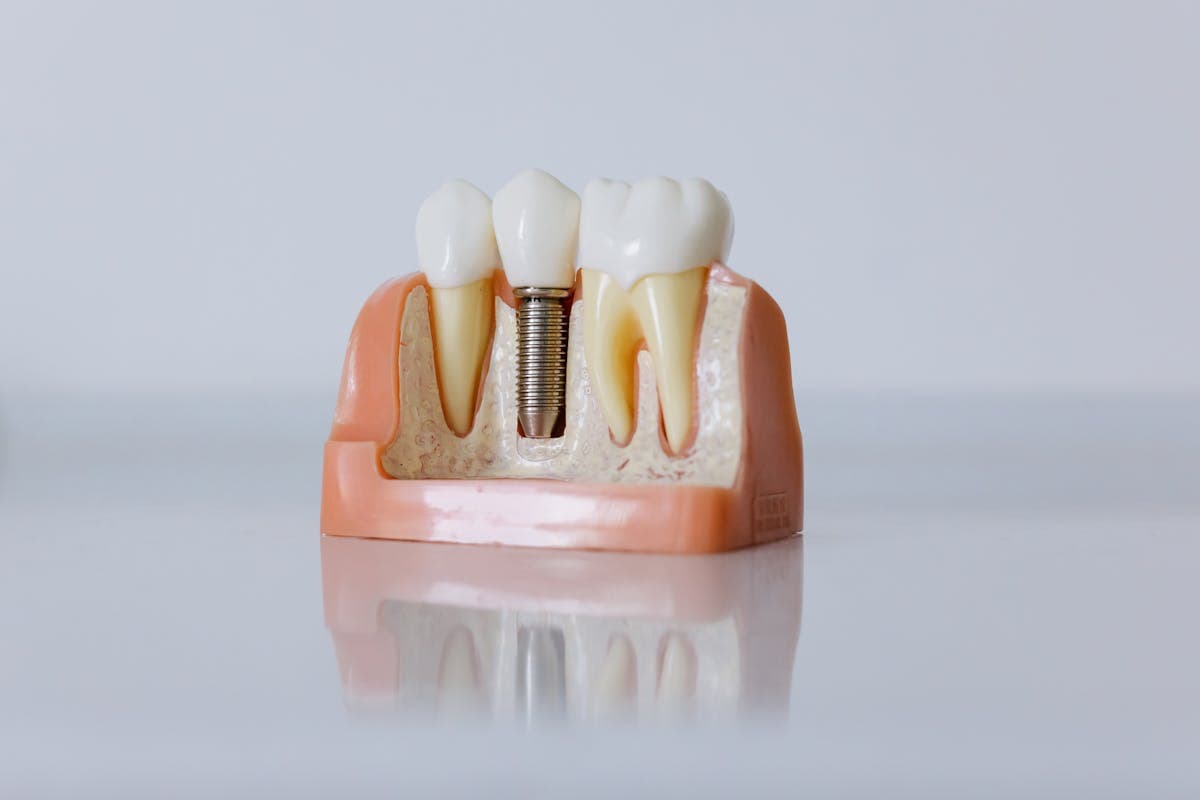
What are the side effects of dental implants?
Placing a dental implant is minor oral surgery, so your body responds the way it does to any surgical procedure: with a short, predictable period of inflammation while it heals. Most of what patients describe as a "side effect" in the first week is that healing process working normally.
The common, expected effects are:
- Soreness at the surgical site, usually an ache rather than sharp pain
- Swelling of the gum and sometimes the cheek, peaking around two to three days
- Bruising on the cheek or under the jaw, which can appear a day or two later
- Minor bleeding or oozing on the first day
- Jaw stiffness and mild difficulty opening wide
- A metallic taste or awareness of stitches for the first few days
Less common but recognised complications include infection at the site, failure of the implant to integrate with the bone, sinus irritation where an upper back implant sits close to the sinus floor, and nerve irritation in the lower jaw causing altered sensation in the lip or chin.
Side effects of dental implants: normal healing vs warning signs
The useful distinction is not which symptom you have, but which direction it is heading. Normal healing improves day by day. Problems get worse, or appear after you had already started feeling better.
| What you notice | Normal healing | Call us if | | --- | --- | --- | | Pain | Aches on days 1–3, then eases steadily | It intensifies after day 3, or returns after settling | | Swelling | Peaks at 48–72 hours, then reduces | It spreads toward the eye, jaw, or neck, or starts days later | | Bleeding | Light oozing on day 1 | Bleeding is heavy or will not stop with gentle pressure | | Taste and odour | Metallic taste for a few days | A persistent bad taste, foul odour, or discharge | | The implant itself | Feels fixed and quiet | It feels loose, moves, or is painful to press | | Sensation | Numb from anaesthetic for a few hours | Numbness or tingling in the lip, chin, or tongue lasts beyond the day of surgery | | Temperature | You feel well in yourself | Fever, chills, or feeling generally unwell |
What causes implants to fail
Implant failure is uncommon, but it is worth understanding what drives it, because most of the factors are ones you and your dentist can influence together.
Failure to integrate. An implant works because bone grows onto the titanium surface and locks it in place. If that process is disrupted, the implant stays mobile and has to be removed. Micro-movement during early healing, inadequate bone volume at the site, and smoking are the usual culprits.
Infection at the site. Bacteria entering the healing site can prevent integration. This is why after-care instructions matter, and why we review your medical history for anything that affects healing before we start.
Peri-implantitis, later on. Years after a successful implant, plaque around the gum margin can cause inflammation that erodes the supporting bone. It is the implant equivalent of gum disease and it is largely preventable with regular hygiene appointments.
Bite forces. An implant crown that takes more force than it was designed for, or a heavy grinding habit, can loosen components or fracture the crown. If you grind, a night guard protects the investment.
How we reduce the risks before we start
Most complications are addressed in the planning stage rather than after the fact. Before placing an implant we review your medical history and medications, assess bone volume and the position of nearby structures with imaging, treat any active gum disease first, and talk honestly about smoking if it applies. If the site needs preparation before an implant can be placed predictably, we will say so rather than proceed and hope.
If you have not had the implant placed yet, our guide to what happens during a dental implant procedure walks through the stages and the healing timeline. For how we approach implant treatment, see the dental implants page, and for coverage and what shapes an estimate, the cost of dental implants.
Looking after a new implant
For the first few days, keep to soft foods and chew on the other side. Avoid smoking entirely if you possibly can. Do not rinse vigorously on the first day; after that, gentle salt-water rinses help keep the area clean. Clean your other teeth normally and keep the surgical site clean as instructed, rather than avoiding it altogether.
Longer term, an implant needs the same attention as a natural tooth: daily brushing, cleaning between the teeth, and regular check-ups and hygiene visits so that any inflammation around the gum margin is caught while it is still easy to treat.
If something does not feel right, call us. It is a short conversation, and it is always better to check early than to wait and see.