What are veneers in dentistry?
A dental veneer is a thin, custom-made shell that is bonded permanently to the front surface of a tooth. It changes how that tooth looks without encasing it the way a crown does. Most veneers are made of porcelain, fabricated in a dental laboratory from a digital scan or impression of your teeth, and matched to a shade agreed with you beforehand.
The material matters because it does the work. Porcelain reflects light in a way that resembles natural enamel, resists staining well, and holds a polished surface over years of use. That is why a well-made veneer reads as a tooth rather than as a covering.
Veneers are commonly used for:
- Teeth that are discoloured and do not respond to whitening
- Chips, small fractures, or edges worn down over time
- Teeth that are slightly irregular in shape or noticeably narrow
- Small gaps between front teeth
- A tooth that sits slightly out of line with its neighbours
They are not a solution for meaningful crowding or bite problems. Where teeth need to move, alignment treatment comes first — you can compare the options in our guide to Invisalign versus braces.
What dental veneer treatment involves
Treatment usually runs across two appointments over one to two weeks.
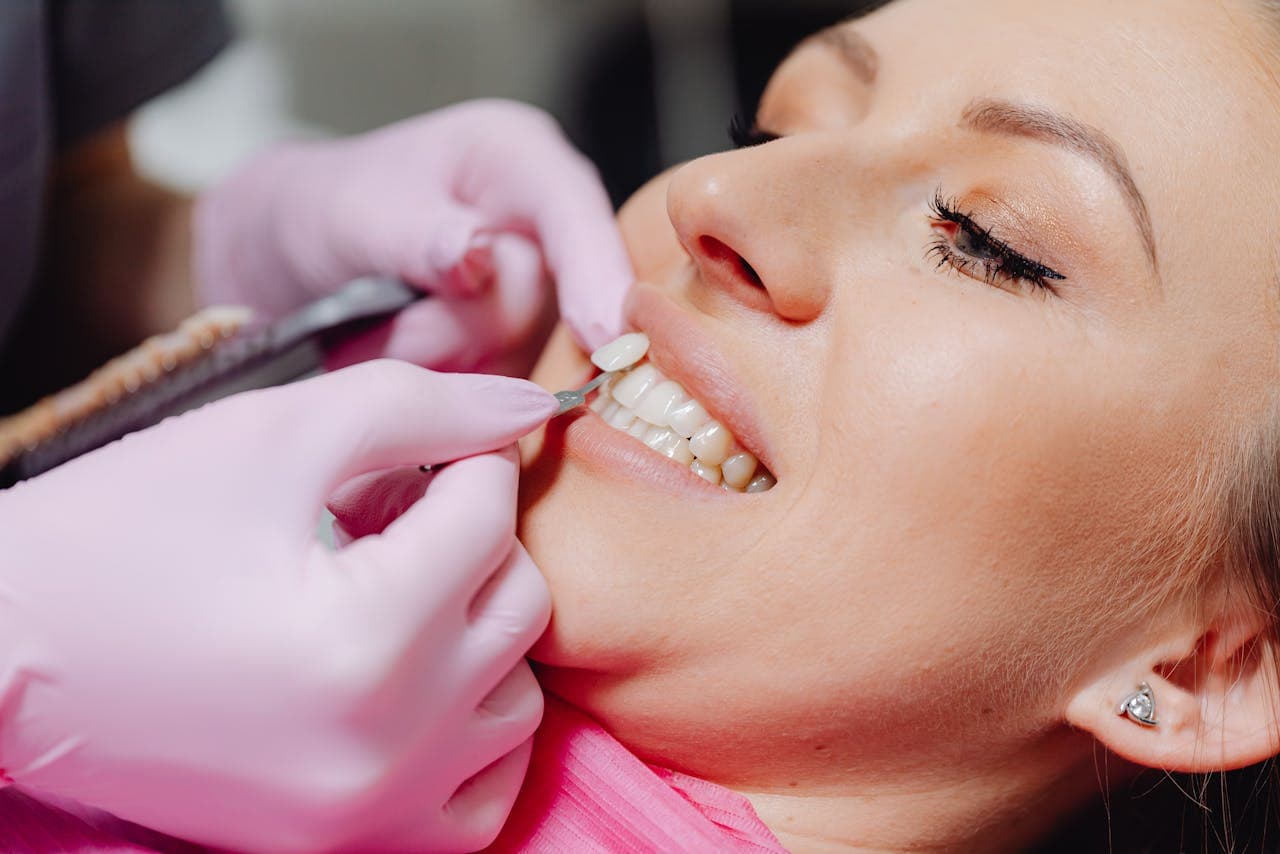
Planning and preparation. The first visit is about deciding what "better" means in your case: shade, shape, length, and how much change is realistic given the teeth you have. A thin layer of enamel is then removed from the front of each tooth being treated, to make room for the veneer to sit flush rather than bulky. A scan or impression goes to the laboratory, and temporary veneers are usually placed in the meantime.
Fitting and bonding. At the second visit, the porcelain veneers are tried in and checked against your face rather than just your teeth: colour in natural light, edge position when you speak, symmetry when you smile. Once you and the dentist are satisfied, they are bonded permanently and the bite is adjusted so nothing catches.
Most people find the appointments straightforward. If dental visits are difficult for you, say so when you book — we plan a slower pace, and our dental anxiety page explains how.
Veneers or bonding: which suits the problem
This is the question most people actually arrive with, and the answer is rarely "whichever is better". They solve overlapping problems in different ways.
| | Porcelain veneers | Composite bonding | | --- | --- | --- | | How it is made | In a dental laboratory | Sculpted directly on the tooth, in the chair | | Visits needed | Usually two, over one to two weeks | Usually one | | Enamel removed | A thin layer, permanently | Minimal or none | | Typical lifespan | 10–15 years or longer | Around 5–8 years | | Stain resistance | High | Lower; can pick up stain over time | | Repairability | Usually replaced rather than repaired | Can often be repaired or re-polished | | Reversible | No | Largely, where no enamel was removed | | Best suited to | Multiple teeth, colour changes that whitening cannot fix, longer-term results | Single chips, small gaps, a less invasive first step |
Bonding is often the sensible starting point when the change needed is small or when you would rather not commit to enamel removal. Veneers earn their place when several teeth need to match, when the colour change is beyond what whitening can achieve, or when you want a surface that will hold its appearance for many years. Both are described in more detail on our veneers and bonding page.
Who veneers do and do not suit
Veneers work best on teeth that are fundamentally healthy and well supported. They are a surface treatment, so anything structural has to be dealt with first: active decay, gum disease, or a tooth that needs a crown rather than a facing.
Heavy grinding is the most common reason to pause. Porcelain is strong but brittle, and a grinding habit that has already worn natural enamel will treat a veneer no more gently. That does not rule veneers out, but it usually means addressing the grinding and protecting the result with a night guard.
Looking after veneers
Veneers are cleaned like natural teeth: brush twice daily, clean between the teeth, and keep regular check-ups so the gum margins stay healthy. The edge where the veneer meets the tooth is the vulnerable point, and it is protected by ordinary good cleaning rather than anything special.
Beyond that, the habits that shorten a veneer's life are predictable: biting nails, chewing pens or ice, opening packaging with your teeth, and untreated grinding. Coffee, tea, and red wine stain the natural teeth around a veneer more readily than the porcelain itself, which is worth knowing if you are matching shades.
If a veneer chips or comes loose, keep the piece if you have it, avoid chewing on that side, and call us. It is not usually an emergency, but it is worth assessing promptly.