What are porcelain veneers: and what can they change?
A porcelain veneer is a thin, custom-made shell that covers the front surface of a tooth. They're made in a dental lab from impressions or digital scans of your teeth, then bonded permanently in place. The result is a surface that looks like natural tooth enamel, with the shape, colour, and light-reflecting qualities dialed in precisely.
Veneers are well suited for:
- Teeth that are discoloured and don't respond to whitening
- Teeth with chips, small fractures, or worn-down edges
- Minor shape irregularities or slight size differences between teeth
- Small gaps that don't warrant orthodontics
- A combination of issues across several front teeth
Veneers are not the right choice for teeth with significant structural damage, large fillings, or active bite problems. If there's any doubt, we'll tell you what the better option is.
What is composite bonding: and how does it differ?
Composite bonding uses the same tooth-coloured resin material as a filling, applied and sculpted directly onto the tooth in a single appointment. No lab is involved. Your dentist applies the resin in thin layers, shapes it to match the surrounding tooth, then hardens it with a curing light and polishes it smooth.
Bonding is a good option when:
- The change needed is modest, a chipped corner, a small gap, a slightly irregular shape
- You'd prefer a reversible or repairable approach
- You want to see results in one visit without a significant investment
The trade-off is durability: composite resin is softer than porcelain and can stain or chip over time. With good care, bonding can look great for many years, but it's reasonable to expect some maintenance.
What does the veneer process actually look like?
Consultation and smile assessment
We look at your teeth, talk about what's bothering you, and discuss what's achievable, honestly. We'll show you examples and take photos so we can plan together.
Preparation appointment
We remove a very thin layer of enamel from the front of each tooth receiving a veneer. This is done under local anaesthetic. Temporary veneers are placed while your permanent ones are made in the lab.
Fitting appointment
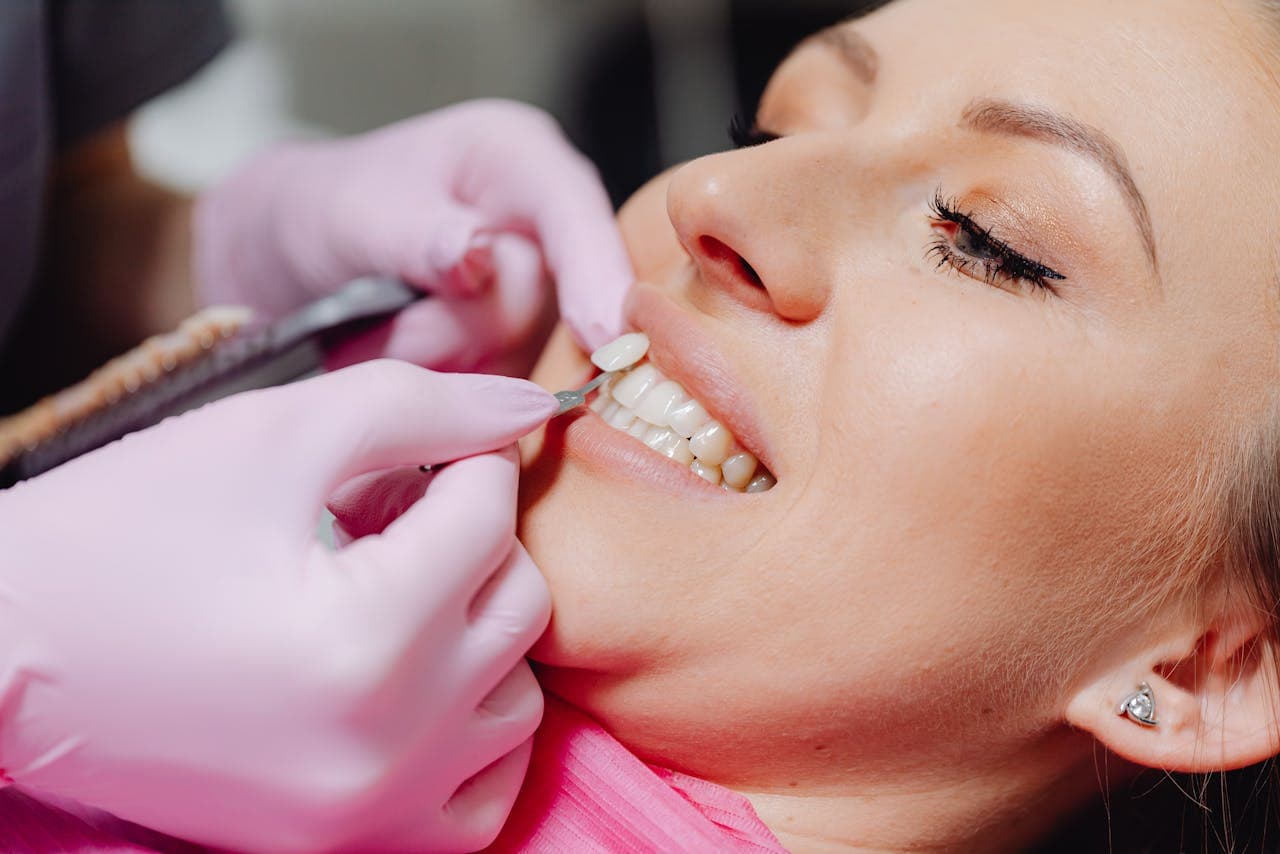
We try in the finished veneers, check the colour and fit, and bond them permanently once everything looks right. Small adjustments can be made at this stage before final bonding.
Follow-up
We see you back in a few weeks to make sure everything is settling in well and to check your bite.
How long do veneers last?
Porcelain veneers typically last 10 to 15 years, and frequently longer when they are looked after. Composite bonding is a shorter-lived material, generally 5 to 8 years before it needs polishing, repair, or replacement.
What actually determines the lifespan is rarely the material itself:
- Habits. Biting nails, chewing ice or pen lids, and opening things with your teeth put stress exactly where a veneer is bonded.
- Night grinding. If you clench or grind, a night guard protects the work. Skipping it is the fastest way to chip a veneer.
- Gum health. Gums recede over years, which can expose the margin where the veneer meets the tooth. That is a cosmetic issue rather than a failure, but it is a common reason people replace veneers.
- Staining, for bonding specifically. Composite picks up colour from coffee, tea, red wine, and smoking in a way porcelain largely does not.
One thing worth understanding before you commit: preparing a tooth for a porcelain veneer removes a thin layer of enamel, and that does not grow back. Veneers are therefore a long-term commitment rather than a reversible one — when they eventually wear out, they are replaced rather than simply removed. Composite bonding is far more conservative in that respect. Our guide to what dental veneers are covers the trade-off in more detail.
Managing expectations before you commit
Veneers and bonding work within what your teeth can actually do. They won't fix bite problems, move teeth, or substitute for structural restorations when a tooth is significantly broken. We'd rather have that honest conversation now than leave you disappointed later.
If your primary concern is colour, teeth whitening is worth exploring first, it's simpler, less expensive, and reversible. If your teeth are misaligned, Invisalign may give you a better long-term foundation before any cosmetic work is done.
Ready to explore your options?
Book a cosmetic consultation and we'll look at your teeth together, talk through what's realistic, and give you our honest read on which approach (veneers, bonding, whitening, or something else) would serve your goals well.