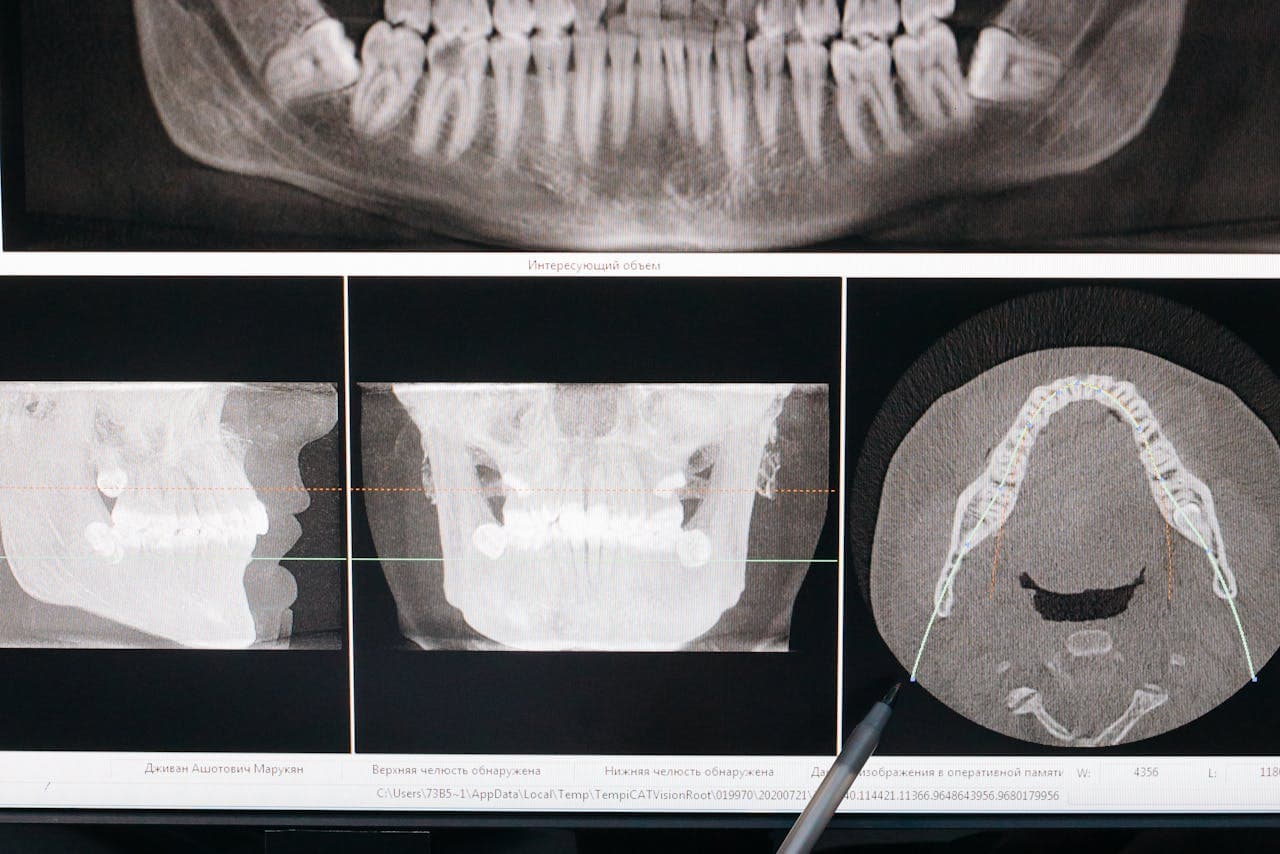
Why wisdom teeth cause problems so often
Wisdom teeth (the third molars) are the last teeth to develop, usually appearing in the late teens or early twenties. By that point, the jaw has already finished growing, and for most people there simply isn't enough room. This causes several predictable problems:
Impaction is the most common issue. An impacted tooth is one that can't erupt normally, may be blocked by the adjacent tooth, growing at an angle, or stuck partially beneath the gumline. Partially erupted wisdom teeth are particularly problematic because the opening in the gum creates a pocket that's almost impossible to clean properly.
Crowding can result when a wisdom tooth pushes against the second molar as it tries to erupt. This can damage the neighbouring tooth's root or shift your existing teeth.
Recurrent infections around a partially erupted wisdom tooth (a condition called pericoronitis) cause swelling, pain, and sometimes difficulty opening the mouth. Once these infections start recurring, removal usually becomes the better long-term solution.
Decay on the wisdom tooth itself, or on the back surface of the second molar beside it, can develop silently in areas that are impossible to clean adequately with a toothbrush.
Signs that it may be time to act
You don't always need to wait for pain to take action. Common signs worth having assessed include:
- Recurring pain or swelling at the back of the jaw
- A wisdom tooth that is partially visible but seems stuck
- Unexplained sensitivity or decay on the tooth in front of the wisdom tooth
- Jaw stiffness or difficulty opening fully
- X-ray findings showing a problematic position or developing cyst
Equally, some wisdom teeth cause none of these signs and don't need to be removed. We won't recommend extraction without a reason we can show you.
What the evaluation involves
Before any recommendation about removal, we take a panoramic X-ray (or review recent imaging) that shows all four wisdom teeth in context, their positions, angles, root formation, and their relationship to surrounding structures. We pair this with a clinical exam assessing whether any eruption is occurring and whether there are signs of current or developing problems.
After that, we'll sit with you and go through what we found in plain language. If removal is recommended, we'll explain exactly why. If it isn't, we'll let you know what we're watching for at future visits.
What the removal procedure involves
Most wisdom tooth extractions are done in our office under local anaesthetic in a single appointment. For straightforward erupted teeth, the procedure is similar to any other extraction. For impacted teeth, a small amount of gum tissue or bone may need to be removed to access the tooth, which is done gently and efficiently.
The procedure typically takes 30 to 60 minutes depending on the number of teeth and their positions. You'll be awake and comfortable throughout, you'll feel pressure and movement, but not pain. If you're anxious, let us know when you book; we can discuss options to help you feel more at ease.
Aftercare: what matters most
The first 48 hours are the most important part of recovery. Here's what helps:
- Bite gently on gauze for the first hour after leaving the office to help the clot form
- Avoid straws, smoking, and forceful spitting: these can dislodge the clot and cause dry socket
- Stick to soft foods for the first few days: yogurt, soup, eggs, mashed vegetables
- Keep the area clean but gently, rinse with warm salt water starting the day after surgery, not immediately
- Expect some swelling: it typically peaks around day two, then decreases. An ice pack on the outside of your cheek in the first 24 hours helps
- Take pain relief as directed: most patients do well with ibuprofen or acetaminophen on a scheduled basis for the first two to three days
Stitches, if placed, typically dissolve on their own within a week or two.
What's normal and what to watch for
Some oozing, swelling, and soreness is expected. Call us if you experience:
- Pain that is getting significantly worse after day three (not better)
- Fever or chills
- Swelling that is spreading to your neck or throat
- Difficulty swallowing or breathing
These can indicate an infection or dry socket that needs attention, don't wait and see.
Need a second opinion or an urgent assessment?
If a wisdom tooth is causing acute pain right now, our emergency dentistry page has guidance on what to do before your appointment. For ongoing questions about oral health, general dentistry is the natural starting point for new and existing patients alike.
Ready for an assessment?
Book an appointment and bring any recent X-rays if you have them. We'll take a clear look, explain what we find, and give you a recommendation you can make sense of.